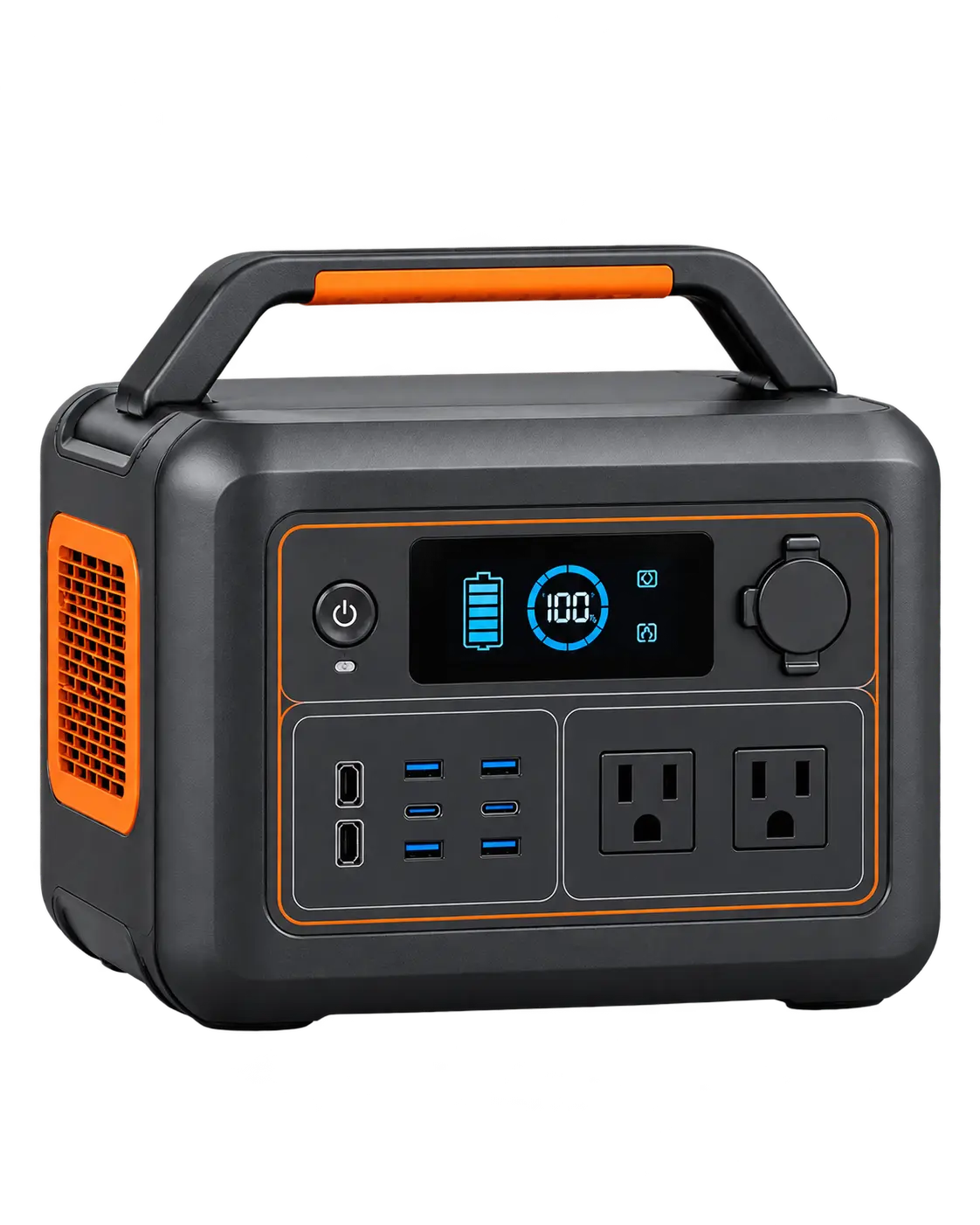
What Size Portable Power Station Do I Need? (Simple Calculator Guide)
Choosing the right size is the most important decision when buying a portable power station. Too small and it dies mid-outage; too big and you’ve paid for capacity (and weight) you’ll never use. This guide shows you how to work out exactly what size portable power station you need in three steps.
Quick answer
Most people need about 1,000Wh for camping or CPAP, 2,000–3,000Wh to keep a fridge and essentials running for a day, and an expandable 5kWh+ system for multi-day outages. Try our runtime calculator for your exact devices.
Watts vs Watt-Hours: The Two Numbers That Matter
- Watt-hours (Wh) = capacity. How much energy the battery stores, or how long it can run your devices.
- Watts (W) = output. How much power it can deliver at once, or which devices it can run.
You need enough of both: enough output to start and run your biggest appliance, and enough capacity to run everything for as long as you need. Our beginner’s guide to power stations explains more.
The 3-Step Sizing Formula
- List your devices and their watts. Check labels or manuals. For fridges, divide the yearly kWh on the energy label by 8.76 to get average watts.
- Multiply watts × hours of use per day and add them up. That’s your daily Wh.
- Multiply by 1.2 to cover inverter losses and give yourself a buffer. That’s the minimum capacity to buy.
Then check output: the power station’s continuous watts must exceed the total of everything running at the same time, and its surge rating should cover your largest motor (fridge, pump or tool).
Worked example: a one-day outage
| Device | Watts | Hours/day | Wh/day |
|---|---|---|---|
| Refrigerator (avg) | 60 | 24 | 1,440 |
| Wi-Fi router | 10 | 24 | 240 |
| LED lights | 30 | 6 | 180 |
| Phones + laptop | — | — | 150 |
| Total | 2,010Wh |
2,010Wh × 1.2 = about 2,400Wh. A 2,000Wh unit with some solar, or a 3,000Wh unit like the Pecron E3600LFP, covers a full day.
Runtime Table by Power Station Size
| Device | 500Wh | 1,000Wh | 2,000Wh | 3,000Wh |
|---|---|---|---|---|
| Phone charge (15Wh) | ~28 | ~57 | ~113 | ~170 |
| CPAP (40W) | ~11 hrs | ~21 hrs | ~42 hrs | ~64 hrs |
| Laptop (60W) | ~7 hrs | ~14 hrs | ~28 hrs | ~42 hrs |
| Fridge (60W avg) | ~7 hrs | ~14 hrs | ~28 hrs | ~42 hrs |
| TV (80W) | ~5 hrs | ~10 hrs | ~21 hrs | ~32 hrs |
| Window AC (500W) | ~50 min | ~1.7 hrs | ~3.4 hrs | ~5 hrs |
Recommended Sizes by Use
| Use | Recommended capacity | Recommended output | Our pick |
|---|---|---|---|
| Weekend camping | 300–700Wh | 300–600W | ALLPOWERS R600 |
| Camping + CPAP | 1,000–1,500Wh | 1,000W+ | Jackery Explorer 1000 v2 |
| RV weekends | 1,500–2,000Wh | 2,000W+ | Pecron E1500LFP |
| Home backup, 1 day | 2,000–3,000Wh | 2,000–3,600W | Aferiy P210 / Pecron E3600LFP |
| Multi-day outages | 5,000Wh+ (expandable) | 3,600W | Aferiy P310 + batteries |
See full reviews of each model in our guide to the best portable power stations.
FAQ
Is 1,000Wh enough for a power outage?
For a short outage, yes: 1,000Wh runs a fridge for about 12–15 hours, or a router, lights and phones for days. For a full day of fridge plus essentials, choose 2,000Wh or more.
What size power station do I need to run a refrigerator?
At least 1,000W continuous output with high surge, and 1,000–2,000Wh of capacity for 12–28 hours of runtime.
Should I buy a bigger power station than I need?
A 20–30% buffer is smart, because batteries lose a little capacity over time and outages often last longer than expected. Expandable models let you add capacity later.

