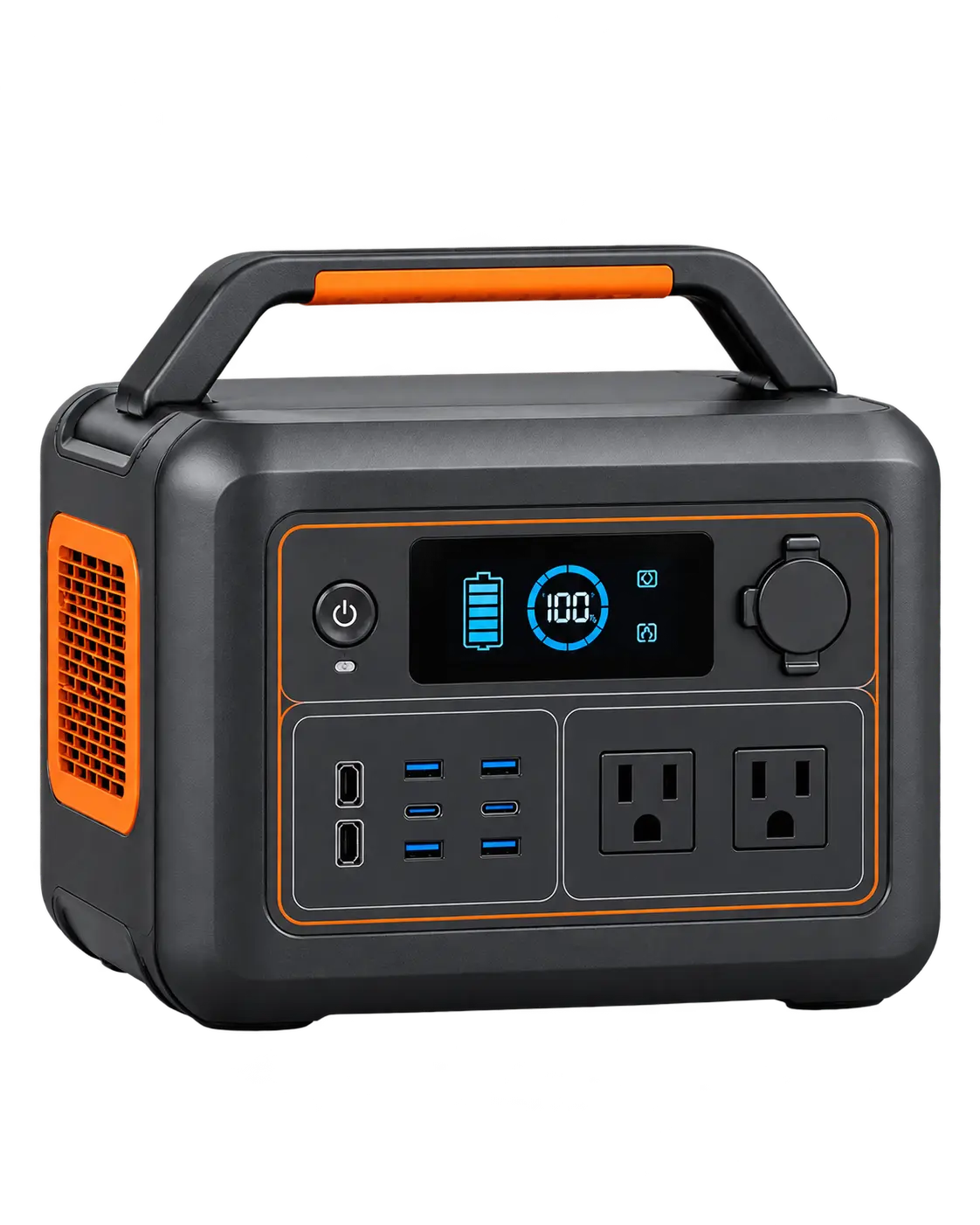
Best Large Portable Power Station (3,000Wh+) for 2026
We may earn a commission when you buy through links on this page, at no extra cost to you. Learn more.
For multi-day outages, off-grid cabins and serious home backup, you need a large portable power station: 3,000Wh or more, 3,000W+ output and ideally the option to add batteries.
Quick answer
The Aferiy P310 offers the most capacity (3,840Wh, expandable to 11,520Wh). The Pecron E3600LFP is the best all-round heavy hitter with 3,600W output and 240V linking.
Best Large Portable Power Stations
Most capacity: Aferiy P310
Starts at a huge 3,840Wh and scales to 11,520Wh with add-on batteries, enough for a fridge, freezer, lights and internet for several days. Its sub-10ms UPS switchover keeps computers, routers and medical devices running when the grid drops.
✔ Pros
- Massive capacity, expandable to 11.5kWh
- Fast UPS switchover
- Built for multi-day outages
✖ Cons
- Large and heavy; it stays in one place
- Expansion batteries add cost
Best for: multi-day outages, off-grid cabins and home offices.
Best output & 240V option: Pecron E3600LFP
Built for outages. The 3,600W inverter starts fridges, freezers, sump pumps and many power tools, and the 3kWh battery runs a typical fridge plus lights, Wi-Fi and phones for roughly a full day. Link two units with Pecron’s 240V box for 7,200W at 240V, or add expansion batteries for more capacity.
✔ Pros
- Runs almost every 120V household appliance
- Expandable, with 240V capability
- Up to 3,200W fast AC charging
- 2+3-year warranty
✖ Cons
- Heavy (about 79 lb)
- Bigger investment than 1–2kWh units
Best for: home backup, storm prep and off-grid cabins.
Read our full Pecron E3600LFP review.
Best expandable starter system: Pecron E1500LFP
The buy-once, grow-later pick. At 1.5kWh it suits RVs and camping, and two EP3000 expansion batteries take it to 7,680Wh for serious home backup. The 800W solar input is excellent for its size, and Pecron rates the battery for 3,500+ cycles with a 2+3-year warranty.
With two EP3000 expansion batteries it reaches 7,680Wh.
✔ Pros
- Expandable from 1.5kWh to 7.7kWh
- 2,200W inverter with 4,400W surge
- 800W solar input
- ~1.8-hour fast AC charging
✖ Cons
- Expansion batteries add significant cost
- Heavier than 1kWh rivals
Best for: RVers, van-lifers and anyone who wants to start small and scale up.
Comparison
| Model | Base capacity | Max capacity | Output |
|---|---|---|---|
| Aferiy P310 | 3,840Wh | 11,520Wh | 3,600W |
| Pecron E3600LFP | 3,072Wh | Expandable | 3,600W (7,200W at 240V linked) |
| Pecron E1500LFP | 1,536Wh | 7,680Wh | 2,200W |
Buying Tips for Large Power Stations
- Plan where it will live: large units weigh 70 lb+ and are best on wheels.
- Add solar input of 1,000W+ if you want to recharge daily during long outages.
- Use a transfer switch installed by an electrician to power home circuits.
- Check that expansion batteries are available in the US before you buy.
Compare more options in our home backup guide or the full best portable power station list.
FAQ
How long will a 3,000Wh power station last?
It runs a typical fridge for about 40 hours, or a fridge, router, lights and phones for about a day.
Can a large power station run a house?
It can run essential loads; whole-house backup with central AC needs a permanently installed system.


