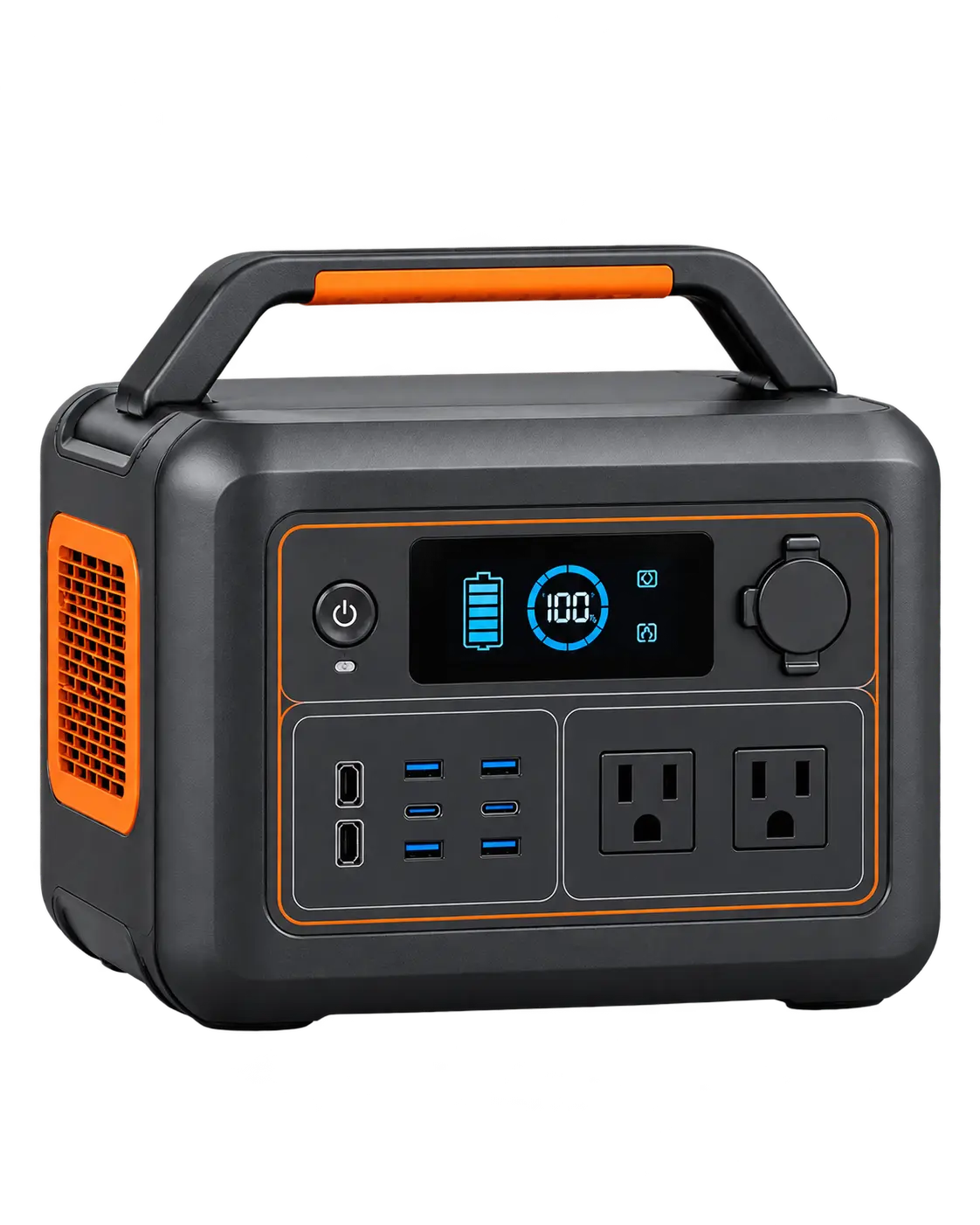
Portable Power Station vs Gas Generator: Which Should You Buy?
We may earn a commission when you buy through links on this page, at no extra cost to you. Learn more.
Should you buy a portable power station or a gas generator? Both keep the lights on when the grid fails, but they work very differently. A power station stores electricity in a battery; a generator burns fuel to make it. That one difference affects safety, noise, cost, runtime and where you can use each.
Quick answer
Choose a portable power station for indoor use, apartments, camping, CPAP and short-to-medium outages. Choose a gas generator if you need to run heavy loads like central AC for many days without sun. Many households own both.
Side-by-Side Comparison
| Portable Power Station | Gas Generator | |
|---|---|---|
| Indoor use | ✅ Safe, no fumes | ❌ Carbon monoxide risk; outdoors only |
| Noise | ✅ Near silent | ❌ Loud (often 60–75 dB+) |
| Fuel | ✅ Wall, car or solar | ❌ Gasoline or propane |
| Maintenance | ✅ Almost none | ❌ Oil, filters, spark plugs, fuel stabilizer |
| Runtime | ⚠️ Limited by battery unless solar | ✅ Unlimited while fuel lasts |
| Upfront cost per watt | ⚠️ Higher | ✅ Lower |
| Instant backup (UPS) | ✅ Yes | ❌ No |
| Starts in cold weather | ✅ Push a button | ⚠️ Can be difficult |
Safety
Gas generators produce carbon monoxide and must run outdoors, well away from windows and doors. Portable power stations produce no exhaust, so you can safely use them inside your home, tent or RV. For many people, especially in apartments, this alone decides the question.
Cost
Generators cost less per watt of output up front, but you pay ongoing costs for fuel, oil and maintenance. Power stations cost more initially but have almost no running costs, and LiFePO4 models last thousands of cycles. Recharging from solar is free.
Runtime
A generator runs as long as you keep adding fuel. A power station runs until the battery is empty: a 2,000Wh unit runs a fridge for about a day. Solar panels or expansion batteries extend that. For long outages with heavy loads, generators still have the edge.
Which Is Right for You?
- Apartment or condo: power station (no outdoor space or fuel storage).
- Camping: power station (quiet hours, no fumes).
- CPAP or medical devices: power station with UPS mode.
- Rural home with frequent multi-day outages: generator, or a large expandable power station with solar.
- Best of both: a power station for silent overnight power plus a small generator to recharge it.
Ready to choose? See our best power stations for home backup or the full list of best portable power stations.
FAQ
Can a portable power station replace a generator?
For many households, yes, especially for short outages, apartments and camping. For week-long outages with heavy loads, a generator or whole-home battery is still more practical.
Is it cheaper to run a power station or a generator?
A power station is cheaper to run: recharging from the grid costs pennies, and solar is free. Generators require fuel and regular maintenance.
Can I charge a power station with a generator?
Yes. Many people run a generator for an hour or two to recharge a power station, then use the silent power station overnight.

