Best Portable Power Station for Camping (2026)
We may earn a commission when you buy through links on this page, at no extra cost to you. Learn more.
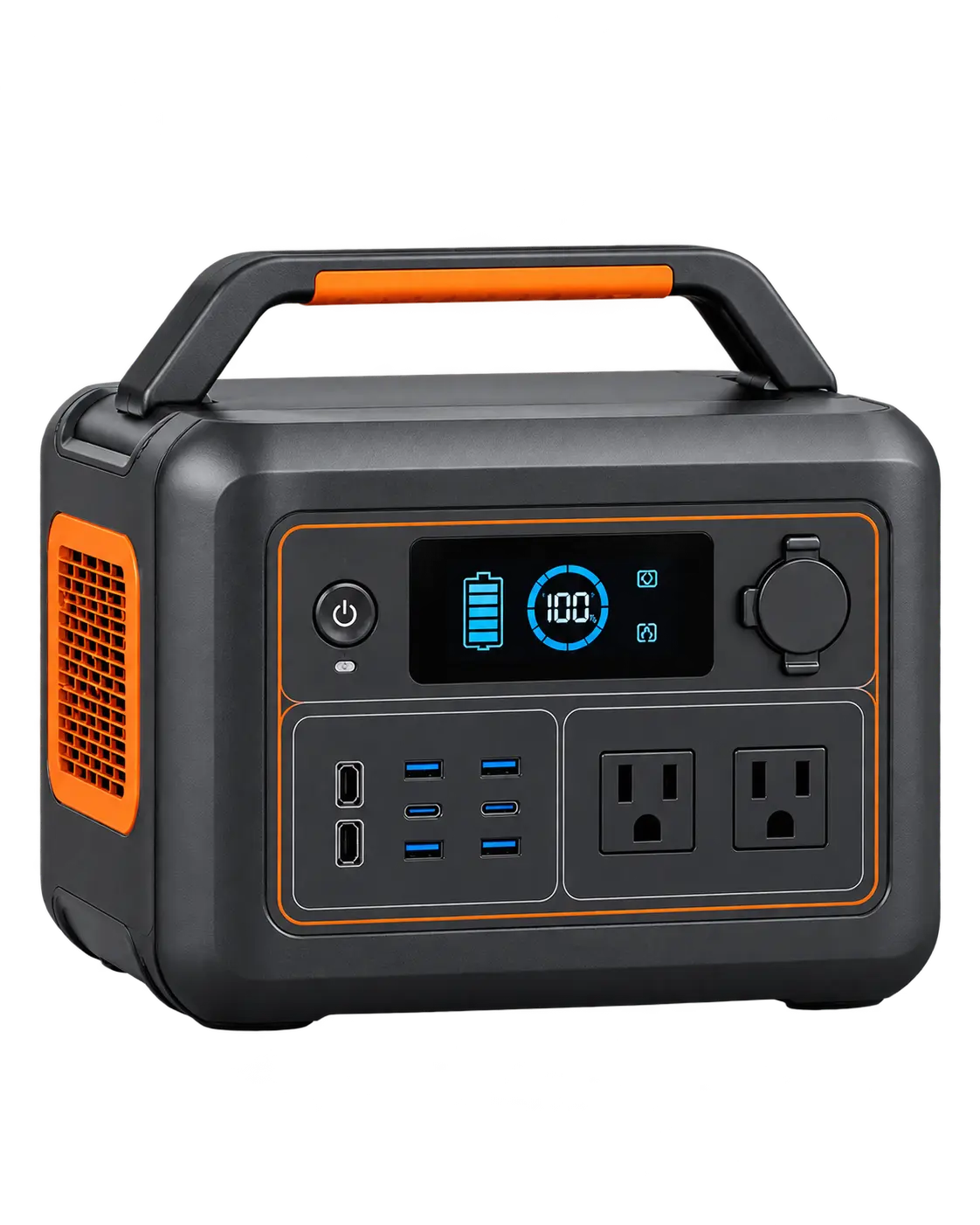
The best portable power station for camping is light enough to carry from the car, quiet enough for a tent and big enough to run your lights, cooler and devices for the whole trip. Unlike a gas generator, it’s welcome at campgrounds with quiet hours, and it can recharge from the sun.
Quick answer
The Jackery Explorer 1000 v2 is the best all-round camping power station: 1,070Wh, 1,500W and about 24 lb. For short trips on a budget, the compact ALLPOWERS R600 is enough for phones, lights and a fan. Pair either with an ACOPower LiONCooler for efficient off-grid refrigeration.
Best Portable Power Stations for Camping
Best overall for camping: Jackery Explorer 1000 v2
The Explorer 1000 v2 hits the sweet spot for most buyers: enough capacity to run a CPAP for two to three nights or a full-size fridge through most of an outage day, yet light enough to carry one-handed to a campsite. Jackery has one of the longest track records in portable power and a large US support network.
✔ Pros
- Excellent capacity-to-weight ratio
- Long-life LiFePO4 battery
- Trusted brand, frequent sales
- Quiet for tents and bedrooms
✖ Cons
- Not expandable
- 1,500W can’t run space heaters or large AC units
Best for: camping, CPAP, apartment backup and road trips.
Read our full Jackery Explorer 1000 v2 review.
Best compact & budget pick: ALLPOWERS R600
A small, affordable unit for weekend trips. 299Wh is enough for phones, lights, a fan, camera batteries and a laptop, and 600W of output covers small appliances.
✔ Pros
- Compact and easy to carry
- Low price
- 600W output for its size
✖ Cons
- 299Wh won’t run a fridge for long
- Not suitable for home backup
Best for: weekend camping, tailgating and charging devices.
Best for long trips & car camping: Pecron E1500LFP
The buy-once, grow-later pick. At 1.5kWh it suits RVs and camping, and two EP3000 expansion batteries take it to 7,680Wh for serious home backup. The 800W solar input is excellent for its size, and Pecron rates the battery for 3,500+ cycles with a 2+3-year warranty.
✔ Pros
- Expandable from 1.5kWh to 7.7kWh
- 2,200W inverter with 4,400W surge
- 800W solar input
- ~1.8-hour fast AC charging
✖ Cons
- Expansion batteries add significant cost
- Heavier than 1kWh rivals
Best for: RVers, van-lifers and anyone who wants to start small and scale up.
Best camping fridge companion: ACOPower LiONCooler
A 12V compressor fridge/freezer with its own removable battery that can run directly from a solar panel. Plug it into any power station’s 12V port for days of cold food off-grid.
✔ Pros
- Very efficient compressor cooling
- Runs from its own battery, solar or 12V
- Freezer-capable
✖ Cons
- Bulky
- Battery runtime depends on temperature and settings
Best for: camping, overlanding and van life.
What Size Power Station Do You Need for Camping?
| Trip style | What you’ll run | Recommended size |
|---|---|---|
| Weekend tent camping | Phones, lights, fan, camera | 250–500Wh |
| Family car camping | Above + 12V cooler, laptop, speaker | 500–1,100Wh |
| CPAP camping | CPAP for 2–3 nights + devices | 1,000–1,500Wh |
| Week-long / overlanding | Fridge, lights, devices + solar recharge | 1,000–2,000Wh + 200–400W solar |
A 12V compressor cooler averages about 30–50W, so a 1,000Wh station runs one for roughly 17–28 hours on its own. Add a 100–200W solar panel and you can keep it going indefinitely in sunny weather.
Camping Power Tips
- Use 12V DC where possible. Running coolers and CPAPs from the 12V port avoids inverter losses and adds 10–20% runtime.
- Pre-cool your fridge at home on wall power before the trip.
- Keep the power station shaded and dry. Heat reduces efficiency and most units are not waterproof.
- Turn off the AC inverter when not in use. An idle inverter can waste 10–20W.
- Bring a solar panel for trips longer than two days. See our solar charging guide.
Looking for a bigger unit for home backup too? Compare all our top portable power station picks.
Camping FAQ
Are portable power stations allowed at campgrounds?
Yes. Because they’re silent and produce no exhaust, power stations are allowed at almost all campgrounds, including those with generator restrictions or quiet hours.
Can a portable power station run a camping fridge?
Yes. A 12V compressor fridge typically averages 30–50W, so a 500Wh unit runs one for about 8–14 hours and a 1,000Wh unit for about 17–28 hours.
Can I charge a power station from my car?
Yes, most units include a 12V car charging cable. Car charging is slow (often around 100–120W), so it works best as a top-up while driving.

