Power Station vs 12V LiFePO4 Battery: Which Do You Need?
We may earn a commission when you buy through links on this page, at no extra cost to you. Learn more.
Do you need a portable power station or a 12V LiFePO4 battery? Both store energy in lithium iron phosphate cells, but a power station is a complete plug-and-play system, while a battery is one component of a system you build yourself.
Quick answer
Buy a portable power station if you want plug-and-play AC power you can move around. Buy a 12V LiFePO4 battery if you’re building a permanent system in an RV, van, boat or shed and want the lowest cost per watt-hour.
What’s the Difference?
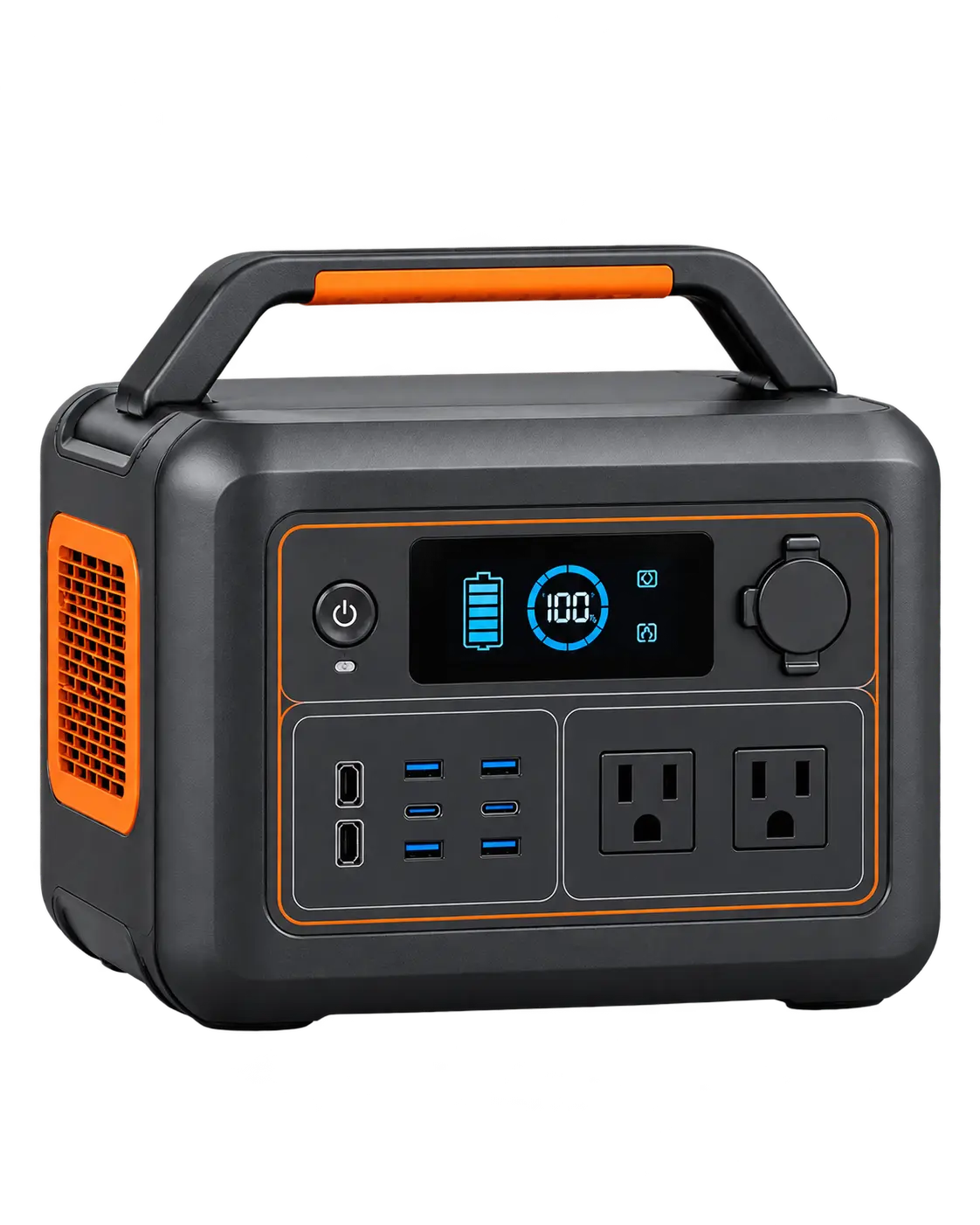
A portable power station bundles a battery, inverter, charge controllers and outlets into one box. A 12V LiFePO4 battery is just the battery. To get household AC power, you add an inverter, a charger or converter, a solar charge controller, fuses and cabling.
Comparison
| Portable power station | 12V LiFePO4 battery | |
|---|---|---|
| Setup | Plug and play | Requires wiring (DIY or installer) |
| Portability | Move between home, car, camp | Permanently installed |
| AC outlets | Built in | Requires separate inverter |
| Cost per Wh | Higher | Lower |
| Scalability | Expansion packs on some models | Add batteries in parallel/series |
| UPS for home electronics | Yes (many models) | Only with extra equipment |
When to Choose Each
- Power station: renters, home backup, camping, CPAP, and anyone who doesn’t want to wire electrical components.
- 12V battery: RV house banks, camper van builds, boats and trolling motors, off-grid sheds and DIY solar.
Recommended Options
Best power station alternative to a DIY build: Pecron E1500LFP
The buy-once, grow-later pick. At 1.5kWh it suits RVs and camping, and two EP3000 expansion batteries take it to 7,680Wh for serious home backup. The 800W solar input is excellent for its size, and Pecron rates the battery for 3,500+ cycles with a 2+3-year warranty.
✔ Pros
- Expandable from 1.5kWh to 7.7kWh
- 2,200W inverter with 4,400W surge
- 800W solar input
- ~1.8-hour fast AC charging
✖ Cons
- Expansion batteries add significant cost
- Heavier than 1kWh rivals
Best for: RVers, van-lifers and anyone who wants to start small and scale up.
Best drop-in 12V battery: LiTime 12V 100Ah LiFePO4
A popular drop-in replacement for lead-acid batteries in RVs, boats and small solar systems, with a 100A battery management system.
✔ Pros
- Lightweight vs lead-acid
- Long LiFePO4 cycle life
- Widely used drop-in size
✖ Cons
- Needs your own inverter and charger
- Don’t charge below freezing
Best for: RV house batteries, trolling motors and DIY solar.
Best high-capacity 12V battery: Vatrer 12V 300Ah LiFePO4
3,840Wh in a single 12V battery, built for RV and solar house banks. One battery replaces three 100Ah units and simplifies wiring.
✔ Pros
- Huge capacity in one battery
- Fewer connections than parallel banks
- Low-temperature protection
✖ Cons
- Heavy
- Requires a properly sized inverter, charger and cabling
Best for: full-time RVers and off-grid solar systems.
See our full 12V LiFePO4 battery guide or our portable power station rankings.
FAQ
Is a 12V LiFePO4 battery cheaper than a power station?
Per watt-hour, usually yes. Once you add an inverter, charger, solar controller and wiring, the gap narrows, but large systems still tend to cost less when built from components.
Can I use a 12V battery for home backup?
Yes, with an inverter and charger, but a portable power station is far simpler and safer for most homeowners.
Do power stations use LiFePO4 batteries?
Most modern models do, including every pick on our site.

