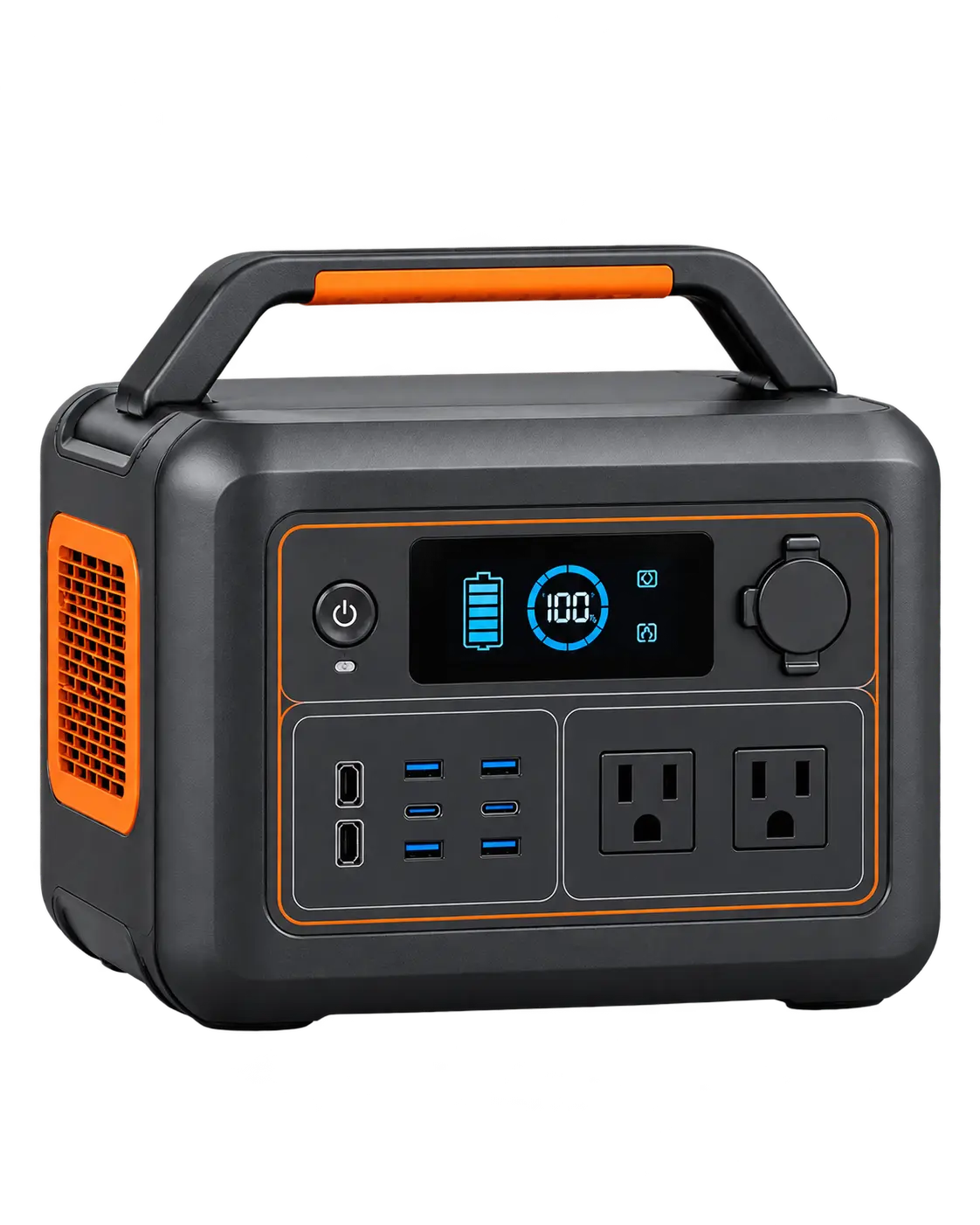
Best Portable Power Station for Home Backup (2026)
We may earn a commission when you buy through links on this page, at no extra cost to you. Learn more.
A portable power station for home backup keeps your fridge cold, your Wi-Fi on and your phones charged when the grid goes down, without the fumes, noise and fuel storage of a gas generator. But home backup is the most demanding job you can give a power station, so capacity, output and surge power matter far more here than for camping.
Quick answer
For most homes, the Pecron E3600LFP (3,072Wh, 3,600W) is the best portable power station for home backup. Choose the Aferiy P310 if you need multi-day capacity (expandable to 11,520Wh), or the Aferiy P210 for the best value at 2kWh.
Best Portable Power Stations for Home Backup
Best overall for home backup: Pecron E3600LFP
Built for outages. The 3,600W inverter starts fridges, freezers, sump pumps and many power tools, and the 3kWh battery runs a typical fridge plus lights, Wi-Fi and phones for roughly a full day. Link two units with Pecron’s 240V box for 7,200W at 240V, or add expansion batteries for more capacity.
✔ Pros
- Runs almost every 120V household appliance
- Expandable, with 240V capability
- Up to 3,200W fast AC charging
- 2+3-year warranty
✖ Cons
- Heavy (about 79 lb)
- Bigger investment than 1–2kWh units
Best for: home backup, storm prep and off-grid cabins.
Read our full Pecron E3600LFP review.
Best for multi-day outages: Aferiy P310
Starts at a huge 3,840Wh and scales to 11,520Wh with add-on batteries, enough for a fridge, freezer, lights and internet for several days. Its sub-10ms UPS switchover keeps computers, routers and medical devices running when the grid drops.
✔ Pros
- Massive capacity, expandable to 11.5kWh
- Fast UPS switchover
- Built for multi-day outages
✖ Cons
- Large and heavy; it stays in one place
- Expansion batteries add cost
Best for: multi-day outages, off-grid cabins and home offices.
Best value home backup: Aferiy P210
2kWh of capacity and a 2,400W inverter at a value-focused price. Independent reviewers report that it stays stable under heavy loads, and combined AC + solar charging refills it in about an hour and a half.
✔ Pros
- Big capacity and output for the money
- Very fast combined charging
- 4,800W surge for fridges and tools
✖ Cons
- Smaller brand, fewer US service options
- Heavier than 1kWh units
Best for: budget-minded home backup, RV weekends and job sites.
Read our full Aferiy P210 review.
Best expandable mid-size: Pecron E1500LFP
The buy-once, grow-later pick. At 1.5kWh it suits RVs and camping, and two EP3000 expansion batteries take it to 7,680Wh for serious home backup. The 800W solar input is excellent for its size, and Pecron rates the battery for 3,500+ cycles with a 2+3-year warranty.
✔ Pros
- Expandable from 1.5kWh to 7.7kWh
- 2,200W inverter with 4,400W surge
- 800W solar input
- ~1.8-hour fast AC charging
✖ Cons
- Expansion batteries add significant cost
- Heavier than 1kWh rivals
Best for: RVers, van-lifers and anyone who wants to start small and scale up.
Best budget backup: ALLPOWERS R1500
ALLPOWERS undercuts the big names on price, and the R1500 is its sweet-spot model. In an independent hands-on review it kept a family fridge and freezer running for about five hours, and its 1,800W output beats many 1kWh rivals.
✔ Pros
- Strong price-to-capacity ratio
- 1,800W output
- LiFePO4 battery and UPS mode
✖ Cons
- Heavier than the Jackery 1000 v2
- Not water-resistant
Best for: budget home backup, workshops and car camping.
Read our full ALLPOWERS R1500 review.
Home Backup Comparison Table
| Model | Capacity | Output / surge | Expandable | Best for |
|---|---|---|---|---|
| Pecron E3600LFP | 3,072Wh | 3,600W / 7,000W | Yes + 240V linking | Whole-kitchen backup |
| Aferiy P310 | 3,840Wh | 3,600W | To 11,520Wh | Multi-day outages |
| Aferiy P210 | 2,048Wh | 2,400W / 4,800W | No | Value 1-day backup |
| Pecron E1500LFP | 1,536Wh | 2,200W / 4,400W | To 7,680Wh | Start small, expand later |
| ALLPOWERS R1500 | 1,152Wh | 1,800W / 3,000W | — | Short outages on a budget |
How Much Capacity Do You Need for Home Backup?
Start with the devices you truly can’t live without during an outage, then add up their daily energy use:
| Device | Typical daily use | Energy per day |
|---|---|---|
| Full-size refrigerator | Cycles all day (~60W average) | ~1,400Wh |
| Chest freezer | Cycles all day (~30–50W average) | ~700–1,200Wh |
| Wi-Fi router + modem | 24 hours at ~15W | ~360Wh |
| LED lights (4 bulbs) | 6 hours at ~40W | ~240Wh |
| Phones and laptop | Daily charging | ~150Wh |
| CPAP (no humidifier) | 8 hours at ~40W | ~320Wh |
A fridge, router, lights and phones together need roughly 2,100–2,300Wh per day. Add a 20% margin and you’re looking at a 2,500–3,000Wh power station for one full day, which is exactly where the Pecron E3600LFP and Aferiy P310 fit. For longer outages, add solar panels or expansion batteries. Use our runtime calculator to size your own list.
Features That Matter Most for Power Outages
- Continuous output of 2,000W+: lets you run a fridge, microwave or coffee maker (one at a time) without tripping the inverter.
- High surge rating: compressors in fridges and freezers briefly draw 2–3× their running watts at start-up.
- UPS / pass-through mode: keeps routers, desktops and CPAP machines running with no interruption. Look for a switchover under 20ms.
- Fast AC charging: 1–2 hour recharge lets you top up quickly when a storm is forecast or power briefly returns.
- Solar input: the only way to recharge during a multi-day outage. Aim for 800W+ on large units.
- Expandability: extra battery packs are the simplest way to reach 5–10kWh without buying a second unit.
- LiFePO4 chemistry: lasts thousands of cycles and can sit at partial charge for months between storms.
Connecting a Power Station to Your Home Safely
The simplest approach is to run extension cords from the power station to the appliances you need. To power hardwired circuits (like a furnace blower or well pump), you need a manual transfer switch or power inlet box installed by a licensed electrician. Never backfeed power through a wall outlet with a double-male cord: it’s illegal in most areas and can electrocute utility workers.
Want to compare more models, including camping and RV picks? See our full guide to the best portable power stations.
Home Backup FAQ
Can a portable power station power a whole house?
Not a typical whole house with central AC and electric heat. A large, expandable unit can run essentials like the fridge, lights, internet, TV and small appliances. Whole-home backup usually requires a permanently installed battery system or a large standby generator.
How long will a portable power station run a refrigerator during an outage?
A full-size fridge averages about 60W over a day, so a 2,000Wh unit runs it for roughly 28 hours and a 3,000Wh unit for about 40 hours, if nothing else is connected. See our guide to fridge runtime.
Is a power station better than a generator for home backup?
For apartments, short outages and indoor use, yes: it’s silent, fume-free and maintenance-free. For week-long outages with heavy loads, a gas generator or whole-home battery is still more practical. Many households own both.
Can I keep my power station plugged in all the time?
Most modern LiFePO4 units with UPS mode are designed to stay plugged in. Check your manual; some brands recommend storing at a partial charge if the unit won’t be used for months.


